Home
About
Keekok
Books
Articles
Contact
|
|

Keekok Lee has published many books
which are shown below. Details, short descriptions and purchasing are
available by following the links beneath each book. She has also
published a selection of articles and chapters in journals and edited volumes.
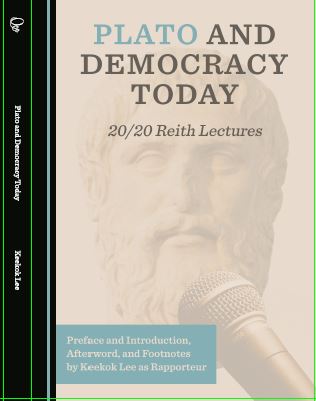 Plato and Democracy Today: 20/20 Reith Lectures, 2018 Plato and Democracy Today: 20/20 Reith Lectures, 2018
This book uses an innovative narrative device to mount an exercise in (popular) political philosophy. It presents Plato as “the 20/20 Reith Lecturer” bringing up to date his critique of democracy which he began more than two thousand years ago in The Republic.
Such an exploration is prompted by the current interest in and reflection on the concept of democracy, following three recent political events in the UK and the USA: the UK Brexit Referendum and the US Presidential Election in 2016, followed by the General Election in the UK in June 2017. These three “unexpected” outcomes have inevitably led Plato to focus on populism and the role it plays in understanding the logic of democracy.
Plato relentlessly exposes its fundamental flaw as demagoguery, relying not so much this time on high abstract philosophical/political theorising but on empirical data to back up his critique. Ironically, he shows that Orwell’s Newspeak is its tongue.
 Classical Chinese Medicine: Theory, Methodology and Therapy In Its Philosophical Framework. Cambridge Scholars Publishing, 2018 Classical Chinese Medicine: Theory, Methodology and Therapy In Its Philosophical Framework. Cambridge Scholars Publishing, 2018
ISBN(13): 978-1-5275-0397-7
This volume completes a trilogy (Lee 2012, 2017 - see below) on the philosophy of medicine, Western and Chinese. Its immediate prequel (Lee 2017) sets out in general outline the philosophical and methodological core of Classical Chinese Medicine (CCM); this volume fleshes out that "skeleton" by examining in detail its peculiar concepts and characteristics, such as Getihua/Personalised Medicine, Preventive Medicine, Tianren-xiangying (Macro-Micro-cosmic Wholism), Zhèng-Fang Wholism (Wholism at the level of diagnosis and treatment), Mind-Body Wholism (the person as primitive concept). CCM is here shown to instantiate "Ecosystem Science" or Ecosystem Thinking which is non-Newtonian in orientation, departing from familiar Newtonian landmarks such as Reductionism, linearity and thing-ontology for a Non-reductionist, non-linear science resting on process-ontology. This approach highlights a rich irony and paradox namely, how CCM in being backward-looking (relying on classical texts as foundational texts and prescriptions of some two thousand years standing), simultaneously manages to be at the cutting edge of scientific thinking today.
To read more, or simply buy this book, click here (Cambridge Scholars Publishing) or here (Amazon).
 Philosophical Foundations of Classical Chinese Medicine: Philosophy, Methodology, Science, Lexington, 2017 Philosophical Foundations of Classical Chinese Medicine: Philosophy, Methodology, Science, Lexington, 2017
This book makes Classical Chinese Medicine (CCM) intelligible to those who are not familiar with the tradition, many of whom may choose to dismiss it off-hand or to assess it negatively) . Keekok Lee uses two related strategies: arguing that all science and therefore medicine cannot be understood without excavating its philosophical presuppositions and showing what those presuppositions are in the case of CCM compared with those of Biomedicine. Such excavations enable Lee in turn to demonstrate the following theses: (1) the metaphysical/ontological core of a medical system entails its own methodology, how to understand, diagnose and treat an illness/disease; (2) CCM rests on process-ontology, is Wholist, its general mode of thinking is Contextual-dyadic, its implicit logic is multi-valent, its model of causality is non-linear and multi-factorial; (3) Biomedicine (in the main) rests on thing-ontology and dualism, is Reductionist, its logic is classical bi-valent, its model of causality is linear and monofactorial; (4) hence to condemn CCM as "unscientific"/"pseudo-scientific"/plain "mumbo-jumbo" while privileging Biomedicine as the Gold Standard of scientificity is as absurd as to judge a cat to be inferior to a dog, using the criteria of "goodness" embodied in a dog-show.
To read more, or simply buy this book, click here (Rowman & Littlefield) or here (Amazon).
 The
Philosophical Foundations of Modern Medicine, Palgrave Macmillan,
Basingstoke, 2012. Pp229. The
Philosophical Foundations of Modern Medicine, Palgrave Macmillan,
Basingstoke, 2012. Pp229.
Exploring the philosophical foundation of modern
medicine this book explains why it possesses the characteristics it does,
accounting for both its strengths as well as its weaknesses.
To read more, or simply buy this book, click here (Palgrave) or here
(Amazon).
 Philosophy and Revolutions
in Genetics: Deep Science and Deep Technology, Palgrave, Basingstoke,
2005 (second edition), pp256. Philosophy and Revolutions
in Genetics: Deep Science and Deep Technology, Palgrave, Basingstoke,
2005 (second edition), pp256.
This book
explores the issues of genetic research and biotechnology, primarily from an
ontological rather than an ethical/political point of view. It examines the two
great revolutions in genetics, Mendelian and molecular genetics and their
implications for technology. The ontological approach is able to cast light in
genetics research on the distinction between the notions of discovery and
invention; in turn this clarification leads to the conclusion that DNA
sequences per se are not patentable, as they are discoveries not
inventions. This book is therefore not only relevant to those interested in the
philosophy of genetics but also to lawyers working in the domain of patent
law.
To read more, or simply buy this book, click here (Palgrave) or here (Amazon).
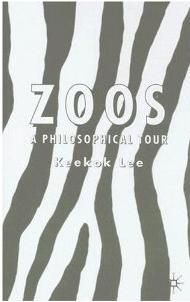 Zoos: A Philosophical Tour, Palgrave,
Basingstoke, 2006, pp170. Zoos: A Philosophical Tour, Palgrave,
Basingstoke, 2006, pp170.
What do visitors see in zoos? 'Wild animals in
captivity', say zoos. They are simply wrong. You may sue them under the Trades
Description Act, as the captive animals they exhibit are not wild, but tame.
However, they are not quite like cats and dogs, although, like them, they, too,
are artifacts. Zoos mislead you, too, when they justify themselves in terms of
conservation via captive breeding or in education-for-conservation; these are
deeply flawed. Zoos define themselves as collections of animal exhibits open to
the public, just as museums exhibit their collections of cultural/artistic
artifacts - the sole difference between them lies in the fact that zoo
artifacts are alive, not dead matter, like paintings or stuffed birds. Zoos
should concentrate instead on providing wholesome family recreation and
entertainment, an important cultural task, which they are uniquely placed to
promote as their animal exhibits themselves are, indeed, unique.
To read more, or simply buy this book, click here (Palgrave) or here (Amazon).
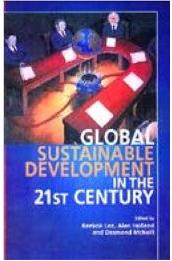 Global Sustainable Development: An Introduction, edited
by Keekok Lee, Alan Holland (University of Lancaster) and Desmond McNeill
(University of Oslo), Edinburgh University Press, Edinburgh, 2000.
Global Sustainable Development: An Introduction, edited
by Keekok Lee, Alan Holland (University of Lancaster) and Desmond McNeill
(University of Oslo), Edinburgh University Press, Edinburgh, 2000.
This book addresses the theme of global sustainable development
across two dimensions. First it introduces its progress and prospects in both
rich and poor countries. It then outlines the major trends that will in
practice influence the direction of sustainable development into the next
century. It encompasses an understanding of sustainable development as both a
theoretical framework for thinking about how to deal with human needs and
environmental limits on the one hand, and a more material understanding of it
as a set of practices, on the other. The book is written by a group of
internationally-recognised experts in the field, and is distinctive in offering
a variety of philosophical and ethical reflections on sustainable development.
Core issues covered include economic growth, poverty reduction, future
generations, technology, population and diversity, making it an ideal text for
students. Key Features: The only available text to introduce the philosophical
and ethical issues surrounding sustainable development Contributors are
internationally-renowned experts in the field and include activists and policy
makers, as well as academics Core areas include global equality, technology,
women and population An ideal course textbook for Politics, Philosophy and
International Relations students.
To read more, or simply buy this book, click here (Edinburgh University Press) or here
(Amazon).
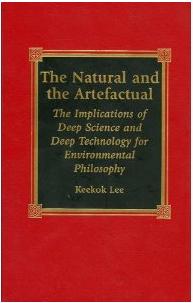 The Natural and the Artefactual: The Implications
of Deep Science and Deep Technology for Environmental Philosophy, Lexington Books (Rowman & Littlefield),
Lanham, 1999, pp288. The Natural and the Artefactual: The Implications
of Deep Science and Deep Technology for Environmental Philosophy, Lexington Books (Rowman & Littlefield),
Lanham, 1999, pp288.
This book attempts to shift the discussion in
environmental philosophy from ethical to ontological values. It argues that all
forms of nature and their processes – biotic and abiotic – are morally
considerable because they are valuable “by themselves”, in virtue of the fact
that they have come into existence and will continue to exist independent of
humankind. It denies that human consciousness is the source and locus of all
values. Even if homo faber were to use less polluting technology, such
increasingly more powerful technology would, nevertheless, transform the world
from the natural to become the artefactual. The terraformation of Mars would be
the apogee of such a profoundly narcissistic civilization as it would involve
the elimination of nature as ‘the ontological Other’.
To read more, or simply buy this book, click here (Rowman & Littlefield) or here (Amazon).
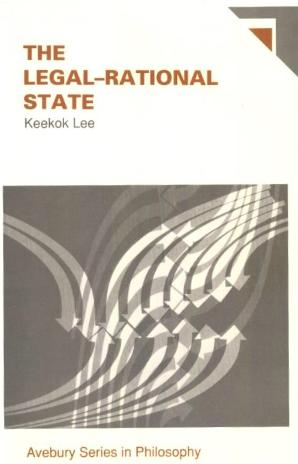 The Legal-Rational State: A Comparative Study of
Hobbes, Bentham and Kelsen, Avebury, Gower, Hampshire. 1990, pp260. The Legal-Rational State: A Comparative Study of
Hobbes, Bentham and Kelsen, Avebury, Gower, Hampshire. 1990, pp260.
An
essential ingredient of the concept of modernity must be the construct of the
legal-rational state, which this book explores through the legal theorising
beginning with Hobbes in the seventeenth, then Bentham in the eighteenth and
Kelsen in the nineteenth centuries. Each theorist constructs his own respective
account of legal positivism.
To read more, or simply buy this book, click here (Amazon).
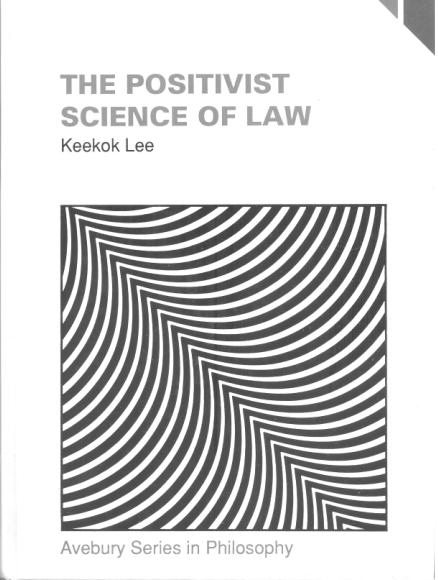 The Positivist Science of Law, Avebury, Gower, Hampshire, 1989, pp213. The Positivist Science of Law, Avebury, Gower, Hampshire, 1989, pp213.
This book
explores the link between positivism and the law, in particular that school of
jurisprudential thought commonly called legal positivism. Positivism as a
general philosophy has a distinctive philosophy of science and a methodology of
science. The author argues that legal positivism is the positivist science of
law; as such it is one of the first positivist sciences, predating even modern
physics.
To read more, or simply buy this book, click here (Amazon).
 Social Philosophy and Ecological Scarcity, Routledge, London,
1989, pp430. Social Philosophy and Ecological Scarcity, Routledge, London,
1989, pp430.
This book
explores the implications for social philosophy of the indisputable fact that
ecological scarcity is absolute scarcity which cannot ultimately be transcended
by technological advances. This means that the ‘good society’ and the ‘good
life’ cannot and should not be predicated upon ever increasing economic growth.
The book argues that the two great models of social philosophy in the twentieth
century, market-based or Marx-led, are au fond forms of capitalism, the
former private, the latter state. In this spirit, the author argues for a
version of the good life/society closer to that of Fourier and Morris than to
that of the mature Marx – in the light of ecological scarcity, this version
based on the acquisition of ‘internal goods’ rather than ‘external goods’
becomes much more ‘realistic’ and less ‘fantastic’.
To read more, or simply buy this book, click here (Amazon).
 A New Basis for Moral Philosophy (International Library of Philosophy Series),
Routledge & Kegan Paul, 1985, pp252. A New Basis for Moral Philosophy (International Library of Philosophy Series),
Routledge & Kegan Paul, 1985, pp252.
This book aims to establish that moral discourse is
critical, rational and objective, that one ought not to be intimidated by the
Humean logical gap between “is” and “ought”. Moral discourse is a form of
fallibilism. Unfortunately, Popper’s ideology had led him astray, destroying
his fallibilism. On the other hand, the book vindicates Mill on two counts –
his variety of nineteenth-century positivism permits fallibilism in value
justification, and his variety of liberalisms requires a meta-ethics which is
objective, critical and rational. What obtains between “is” and “ought” is not
deductive but is what may be called “epistemic implication”.
To read more, or simply buy this book, click here (Amazon).
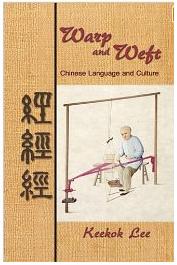 Warp and Weft: Chinese Language and Chinese
Culture,
Eloquent Books, New York, 2008, pp310. [Non-philosophical] Warp and Weft: Chinese Language and Chinese
Culture,
Eloquent Books, New York, 2008, pp310. [Non-philosophical]
Second Edition. Amazon Publishing, October 2017, available in both paperback and Kindle versions - see Home Page under Keekok Lee's latest books.
This book attempts to deconstruct certain key clusters of Chinese characters
and words, centering on themes such as war and peace, kith and kin, male and
female, rites and rituals, pleasure and leisure to make them yield fascinating
tales about Chinese culture and history in which these words are embedded and
which they at the same time encapsulate. The Chinese language, Chinese history
and culture are presented as one long woven bolt of silk (for which China has
historically been noted), with the written language conceived as the warp while
the history and culture the weft. In this process of linguistic exploration,
the book shows in what ways the Chinese written language may be said to be
unique as well as to reveal, amongst other things, certain aspects of: •
ancient Chinese religion, cosmology, philosophy, political theory, law,
medicine, astronomy, physics, geography; • their grasp, on the part of the
ancient Chinese people, of human reproduction, biology and physiology,
psychology, biochemistry, even neurology of the brain; • what constitutes
Chinese identity, the core values of Chinese culture, the essential glue
holding their society together; • their daily existence, such as their food and
drink, the houses they lived in, the furniture they used, their chief modes of
transportation, etc. A fascinating look at Chinese language and culture.
To read more, or simply buy this book, click here (Amazon).
Web site and all contents ©
Copyright K. Lee 2012, All rights reserved.
Last update, 18/08/2017
Free
website templates
|
|